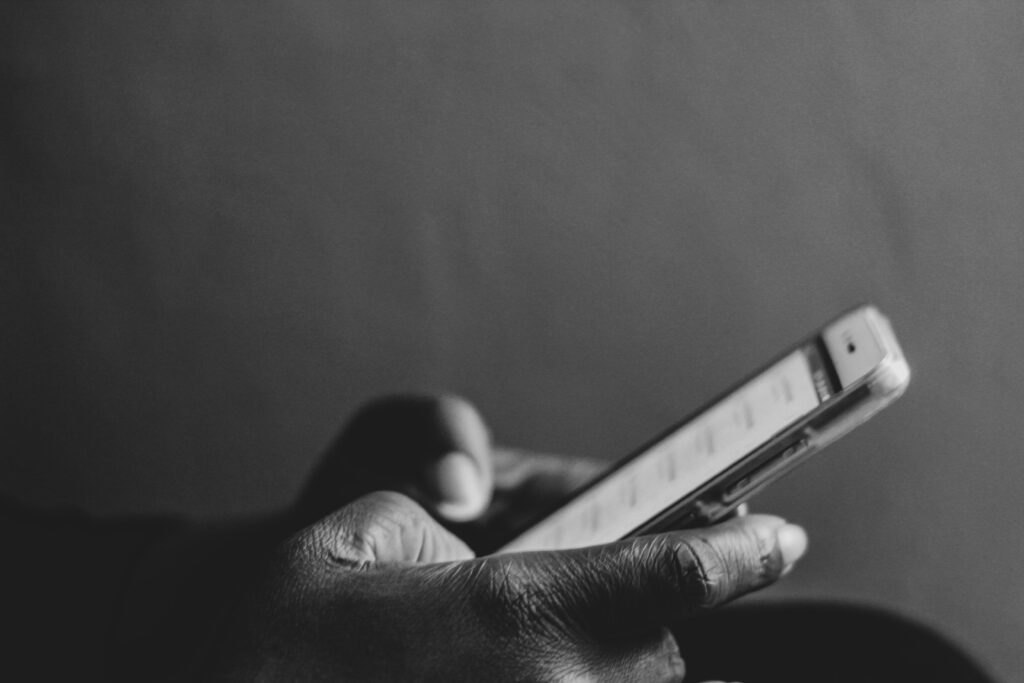
Have you ever promised yourself you’d stop scrolling at 9:00 PM, only to find yourself still staring at your screen at midnight, feeling a cocktail of FOMO and inadequacy?
If this sounds familiar, here is the first thing you need to hear: This is not a character flaw. You are not weak, and you are not lazy. You are simply a human being with a biological brain caught in a digital arms race.
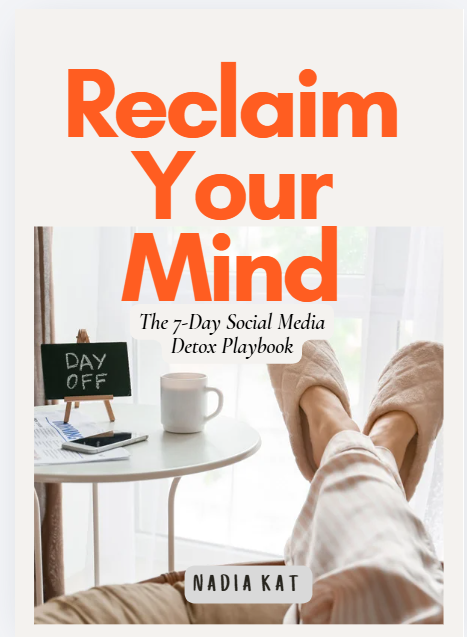
In the groundbreaking new book, Reclaim Your Mind, Nadia K. explains that what we call “phone addiction” is actually a predictable biological response to a system specifically engineered to hijack your consciousness.
It’s Science, Not Willpower
It’s a common misconception that digital wellness is about “self-control.” In reality, you are up against the brightest minds in the world. Social media platforms employ neuroscientists and behavioral psychologists to make their apps impossible to put down.
They use variable reward mechanics – the exact same psychological trick used in slot machines. Every “pull” (the downward swipe to refresh) offers a chance at a “win” (a like, a comment, or a funny video). The dopamine hit you get from a notification is chemically identical to the rush a gambler feels when the cherries line up.
When you use social media for more than two hours a day, your brain begins to physically adapt to this hyper-stimulation:
- Shrinking Decision-Making Power: Activity in your prefrontal cortex—the area responsible for impulse control—actually decreases. You’re literally losing the equipment you need to say “no.”
- A State of Hyper-Anxiety: Your amygdala, the brain’s fear center, becomes hyperactive. This leads to that constant, low-level buzz of stress we’ve all come to accept as a “normal” part of modern life.
- The “Boring” World Syndrome: As your dopamine receptors downregulate, you need more and more stimulation to feel satisfied. This is why a real-life sunset or a physical book can suddenly feel “slow” or “boring.”
The Habit Reflex: Why Your Thumb Has a Mind of Its Own
Many of us open apps without ever consciously deciding to do so. Have you ever checked your email, closed the app, and then immediately reopened it three seconds later?
This is the Habit Reflex. Your brain has built genuine neural pathways around these behaviors. Before your conscious mind can even process a thought, your thumb has already swiped to the home screen and navigated to a feed. You aren’t choosing to scroll; you are reacting to a programmed loop.
Reclaim Your Mind: How to Break the Loop
The good news? The same neuroplasticity that allowed your brain to be “hacked” is the very tool you will use to fix it.
Because your brain is plastic, it can recalibrate. It typically takes about 7 to 21 days of intentional practice for the acute cravings to diminish and for your focus to return. This isn’t about “white-knuckling” through a week of misery or moving to a cabin in the woods. It’s about understanding your neurochemistry so you can stop blaming yourself and start outsmarting the machine.
“The goal isn’t to live without technology, but to ensure that technology is a tool you use—not a master that uses you.” – Nadia K., Reclaim Your Mind
Are You Ready to See What Your Brain Feels Like Without the Digital Noise?
In Reclaim Your Mind, you’ll discover the step-by-step “Neuro-Reset” protocol designed to quiet the digital noise and restore your natural capacity for deep focus, calm, and genuine connection.
Stop fighting your biology and start mastering it. Your attention is the most valuable resource you own – it’s time to take it back.
[Click here to order your copy of Reclaim Your Mind and start your recalibration today.]
Leave a Reply